We are honored to welcome distinguished experts who will share their insights at APCC 2026 in Xi'an, China.
Toward the Convergence of Communication and Artificial Intelligence (ComAI)
In recent years, wireless communication systems have pursued performance gains by exploiting physical resources such as time, spectrum, power, and antenna dimensions, increasing channel capacity limits but raising concerns about long-term sustainability. Motivated by the integration of AI into wireless communications, a new ComAI paradigm converged communications and intrinsic native AI has emerged as a promising alternative, centered on semantic communications. However, unlike classical information theory, which provides foundation and guidance for traditional wireless communication systems, semantic information theory has long lacked a coherent framework due to diverse perspective of semantic information, limiting its ability to guide system design and optimization for semantic communications. Recently, a synonymity-based advances have offers a potential way to address this gap, enabling semantic information theory to offer principled theoretical support and potentially evolve into a unified framework for semantic communication systems.
This report presents a survey of semantic information theory and methods beyond Shannon. We will first introduce ComAI, a new communication paradigm that converges communication and native AI. The system architecture of ComAI, inspired by human intelligence, and its key technologies will be subsequently provided, and then the its essences will also be discussed, elaborating the relationships among communication, intelligence, and semantic information.
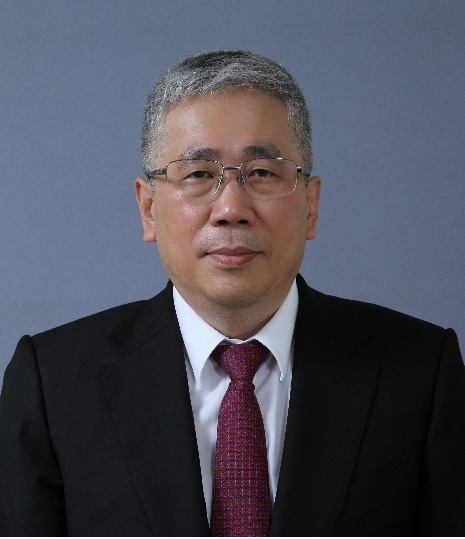
Ping Zhang is Counsellor of the State Council, Member of the Chinese Academy of Engineering (CAE), Professor of Beijing University of Posts and Telecommunications (BUPT), Director of the State Key Laboratory of Networking and Switching Technology. He is the Editor-in-Chief of Journal on Communications, and IEEE Fellow. He has long been committed to theoretical research and technological innovation in mobile communications. He has received many awards and honors including the Grand Prize for the National Science and Technology Progress Award. He is one of the most well-known key contributors to the development of China-pioneered mobile communication technologies, which have been widely adopted on a global scale. His research interests include next-generation mobile networks, semantic communications, and ComAI system.
Semantic Communications for Remote Driving: From Bits to Meaning
The explosive growth of multimedia data, connected devices, and real-time intelligent applications is creating unprecedented challenges for existing communication infrastructures. Traditional systems that transmit raw or compressed data often suffer from high latency and inefficient use of bandwidth, particularly in delay-sensitive applications such as remote driving. Semantic communications offer a promising paradigm shift by focusing on conveying meaningful information rather than transmitting data itself.
This talk introduces a novel low-latency video semantic communication framework for remote driving, based on an asymmetric encoder–decoder architecture. The framework extracts and transmits only essential semantic features, while generative AI at the receiver reconstructs high-quality, semantically consistent video. We also present a prototype implementation that integrates semantic feature extraction, efficient transmission, and AI-based video reconstruction, demonstrating the practical feasibility of the proposed approach. The talk further discusses the broader vision of integrating semantic communications, generative AI, and intelligent networking toward task-oriented, meaning-aware, and resource-efficient 6G systems, highlighting key challenges and future research opportunities.
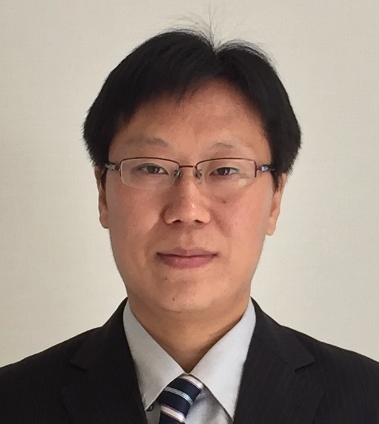
Celimuge Wu received his PhD degree from The University of Electro-Communications, Japan. He is currently a professor and the director of Meta-Networking Research Center, The University of Electro-Communications. His research interests include Semantic Communications, Vehicular Networks, Edge Computing, IoT, and AI for Wireless Networking and Computing. He serves as an associate editor of IEEE Transactions on Networking, IEEE Transactions on Cognitive Communications and Networking, IEEE Transactions on Network Science and Engineering, and IEEE Transactions on Green Communications and Networking. He is a recipient of 2021 IEEE Communications Society Outstanding Paper Award, 2021 IEEE Internet of Things Journal Best Paper Award, IEEE Computer Society 2020 Best Paper Award and IEEE Computer Society 2019 Best Paper Award Runner-Up. He is an IEEE Vehicular Technology Society Distinguished Lecturer. He is a Foreign Fellow of The Engineering Academy of Japan (EAJ), and a Fellow of Asia-Pacific Artificial Intelligence Association (AAIA).

Optical Wireless Communications from the Edge to the Backbone: From Image Sensors to Space-Based Optical Networks
Optical wireless communication encompasses a diverse family of technologies, ranging from visible light signals received by cameras to narrow laser beams connecting underwater vehicles, high-altitude platforms, satellites, and ground stations. These systems should not be evaluated by data rate alone. Their roles depend on communication range, spatial selectivity, mobility, propagation environment, and their ability to integrate communication with sensing and positioning.
This keynote examines the expanding role of optical wireless communication from the intelligent network edge to future backbone infrastructure. It first introduces image-sensor communication for intelligent transportation systems. Although its data rate is generally lower than that of radio-based systems, an imaging receiver can spatially separate transmitters, associate information with visible objects, and combine communication with perception, localization, and ranging. In this sense, image-sensor communication is inherently an integrated sensing and communication technology: the camera senses the surrounding environment while simultaneously receiving data encoded in light. Vehicular experiments using rolling-shutter and event cameras illustrate these distinctive capabilities and their practical limitations.
The discussion then extends to high-capacity, beam-directed optical links. Underwater and high-altitude-platform communications offer substantial capacity where conventional radio or acoustic technologies face constraints. Still, absorption, scattering, atmospheric effects, platform motion, and beam misalignment make acquisition and tracking essential. Finally, optical inter-satellite links and large LEO constellations are considered a possible new layer of global backbone infrastructure. Recent demonstrations and emerging multi-orbit optical-network projects suggest that space-based optical networks could complement terrestrial and submarine fiber by providing flexible routes, lower latency on selected long-distance paths, and greater network resilience.
The talk concludes with a unified research roadmap for identifying, acquiring, tracking, adapting, recovering, and routing spatially selective optical links from the edge to the backbone.
Dr. Takaya Yamazato is a professor and Deputy Director at the Institute of Liberal Arts and Sciences at Nagoya University in Japan. He earned his Ph.D. in Electrical Engineering from Keio University in Yokohama, Japan, in 1993. From 1993 to 1998, he served as an Assistant Professor in the Department of Information Electronics at Nagoya University. Additionally, he was a visiting researcher at the Research Group for RF Communications at the University of Kaiserslautern from 1997 to 1998.
In 2006, Dr. Yamazato received the IEEE Communication Society's Best Tutorial Paper Award. He co-chaired the Wireless Communication Symposia at IEEE ICC 2009 and the Selected Areas in Communication Symposia at IEEE ICC 2011. Additionally, he served as the chair of the Satellite and Space Communication Technical Committee of the IEEE Communication Society from 2008 to 2010. In 2011, he conducted a half-day tutorial titled "Visible Light Communication" at IEEE ICC 2011 in Kyoto, Japan. He also served as the editor-in-chief of the Japanese Section of the IEICE Transactions on Communications from 2009 to 2011, and chaired the IEICE Communication Society editorial board from 2020 to 2021. Furthermore, he received the IEICE Best Paper Award in 2020. Since 2024, he has been serving as the Director of Journals and Transactions for the IEICE.
In addition to his research in wireless communications, Dr. Yamazato has been actively engaged in open education initiatives. He launched the Nagoya University OpenCourseWare in 2005 and has been involved in its management and operation ever since. He has served as a board member of JOCW since its inception in 2005 and is currently a member of the board of Open Education Japan (OEJ). As of 2024, he is also a member of the Board of Directors at Open Education Global (OEG).
Dr. Yamazato's research interests include visible light communication (VLC), intelligent transport systems (ITS), stochastic resonance (SR), and open educational resources (OER).
Security of Network Communication Systems and Cyber Ranges
The report begins with the cybersecurity challenges facing network communication systems and provides a comprehensive introduction to the Cyber Range, a Large-Scale Scientific Facility for Cyberspace, from the perspectives of application requirements, theory, technology, and system architecture. It focuses in particular on the methods and technologies through which cyber ranges can enhance the cybersecurity protection capabilities of network communication systems, advancing them from baseline security to real-world operational security and full-lifecycle security.
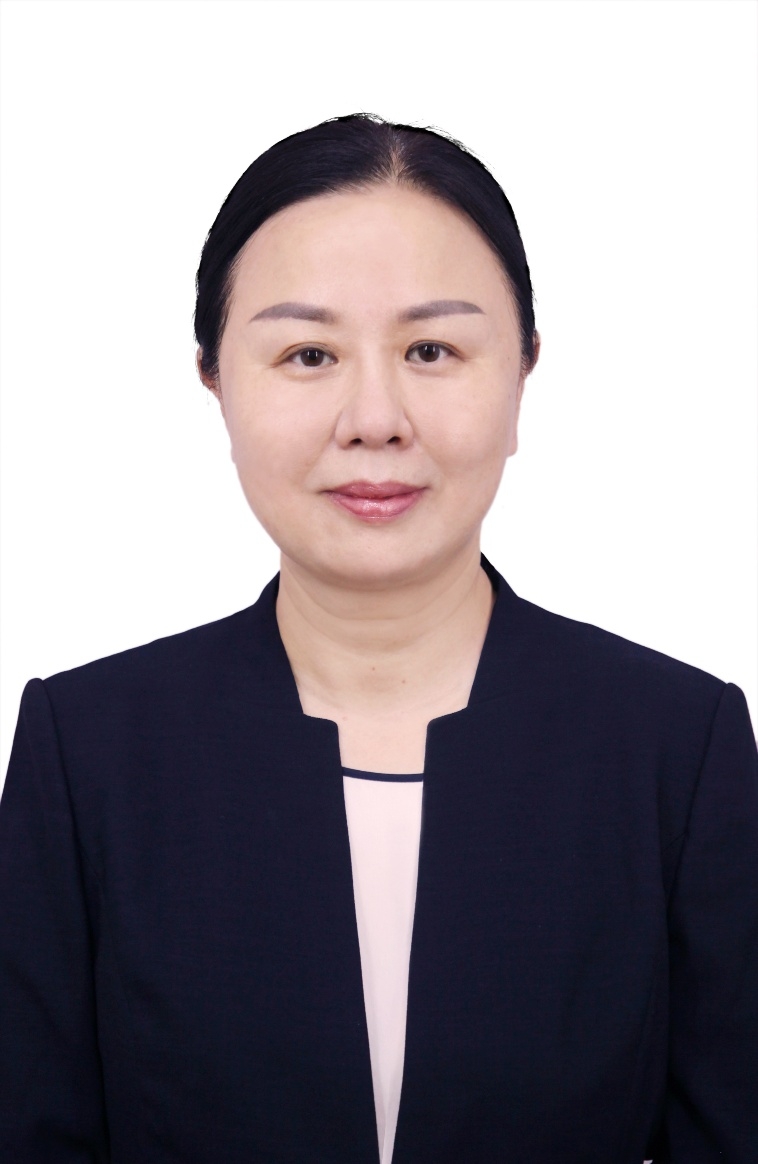
Jia Yan is a Research Professor at the National University of Defense Technology (NUDT). She currently serves as the principal investigator of a national major research program and as Vice President of the Chinese Information Processing Society of China, among other positions. Her primary research interests include the application of artificial intelligence and big data analytics to cyberspace security. As a principal investigator and project leader, she has led or participated in more than 20 major and key national-level research projects and has received five Second Prizes of the National Science and Technology Progress Award. She has published more than 300 SCI/EI-indexed papers, authored eight monographs, been granted 130 invention patents, and led the development of 35 national and industry standards. She is a recipient of the Ho Leung Ho Lee Foundation Prize for Scientific and Technological Progress and has been honored as a National Women's Achievement Pacesetter.

Mobile Network World Models (MobileWM): From Network Perception to Action-Conditioned Reasoning
The integration of artificial intelligence (AI) into mobile networks is emerging as a key enabler of 6G network intelligence. AI has been increasingly applied to network planning, optimization, operations and maintenance, and resource management. However, existing network AI models remain largely tailored to specific scenarios and tasks, with limited capabilities for cross-task and cross-domain coordination, adaptation to changing environments, and reasoning about the consequences of network actions, making reliable autonomous decision-making and closed-loop operation challenging.
Mobile Network World Models (MobileWM) offer a unified modeling paradigm to address these limitations. By integrating multimodal and cross-layer network information, learning network states and dynamics, and modeling action-conditioned state transitions, MobileWM can provide a common foundation for network state cognition, dynamics modeling, and action-conditioned reasoning.
This keynote will explore the conceptual scope, core capabilities, and development roadmap of MobileWM, discuss key challenges and research directions in data, model design, and evaluation, and share recent research progress. MobileWM is expected to extend 6G network intelligence beyond network state perception and prediction toward understanding network dynamics and reasoning about the consequences of actions.
Yuhong Huang is the General Manager of China Mobile Research Institute. She also serves as Secretary-General of the Global TD-LTE Initiative (GTI), a board member of the NGMN ALLIANCE and the O-RAN ALLIANCE. She has long been engaged in the research,and driving the international standardization and industrialization of mobile communication technologies, in particular 4G TD-LTE and 5G. Her current focus is on 5G-A and 6G, with an emphasis on the convergence of communications, sensing, artificial intelligence and computing.

Task-oriented Token Communications for Humanoid Era
The rapid advancement of AI technologies is profoundly reshaping the way we live, work, and interact with the world. In this talk, we explore how AI will empower emerging autonomous systems, providing a compelling vision and motivation for future 6G systems. Particular attention is given to the convergence of physical AI and wireless communications, highlighting how autonomous tasks are related to AI-RAN systems. Real-world demonstrations will be presented to illustrate the opportunities and challenges of AI-native wireless systems.
Byonghyo Shim is a professor in the Department of Electrical and Computer Engineering at Seoul National University (SNU), and a Vice Dean of the College of Engineering. He received B.S. and M.S. degrees in control and instrumentation engineering from SNU in 1995 and 1997, respectively, and an M.S. degree in mathematics and a Ph.D. degree in electrical and computer engineering from the University of Illinois at Urbana-Champaign (UIUC) in 2004 and 2005, respectively. He worked for Texas Instruments in 2004, and from 2005 to 2007, he was with Qualcomm Incorporated. From 2007 to 2014 he was with Korea University as an associate professor. He is an IEEE Fellow and also a member of the Korean Academy of Science and Technology. He was a recipient of the M. E. Van Valkenburg Research Award from UIUC, the Irwin Jacobs Award from Qualcomm and KICS, the Shinyang Research Award from the College of Engineering in SNU, the Okawa Foundation Research Award, the IEEE AP Outstanding Paper Award, the JCN Best Paper Award, and SNU Academic Research Award. His current research focuses on wireless communications, deep learning, information theory, and statistical signal processing. He has been served as an Associate Editor for the IEEE Transactions on Wireless Communications (TWC), IEEE Transactions on Communications (TCOM), IEEE Transactions on Vehicular Technology (TVT), IEEE Transactions on Signal Processing (TSP), IEEE Wireless Communications Letters (WCL), and a division editor for Journal of Communications and Networks (JCN) and also a Guest Editor for IEEE Journal on Selected Areas in Communications (JSAC).